ARC Raiders Solo Movement: Cross Open Ground, Break Contact and Keep an Exit
Solo survival is less about moving slowly everywhere than choosing where speed is useful and where it creates exposure. Without a teammate covering a heal or watching the other doorway, your route must supply those opportunities. This original tactical guide was reviewed October 18, 2026 and assumes standard PvPvE. It deliberately avoids claims that behavior-based matchmaking makes a lobby safe. The limited October PvE test is a separate selection with different rules; always check the actual queue before applying advice about other Raiders.
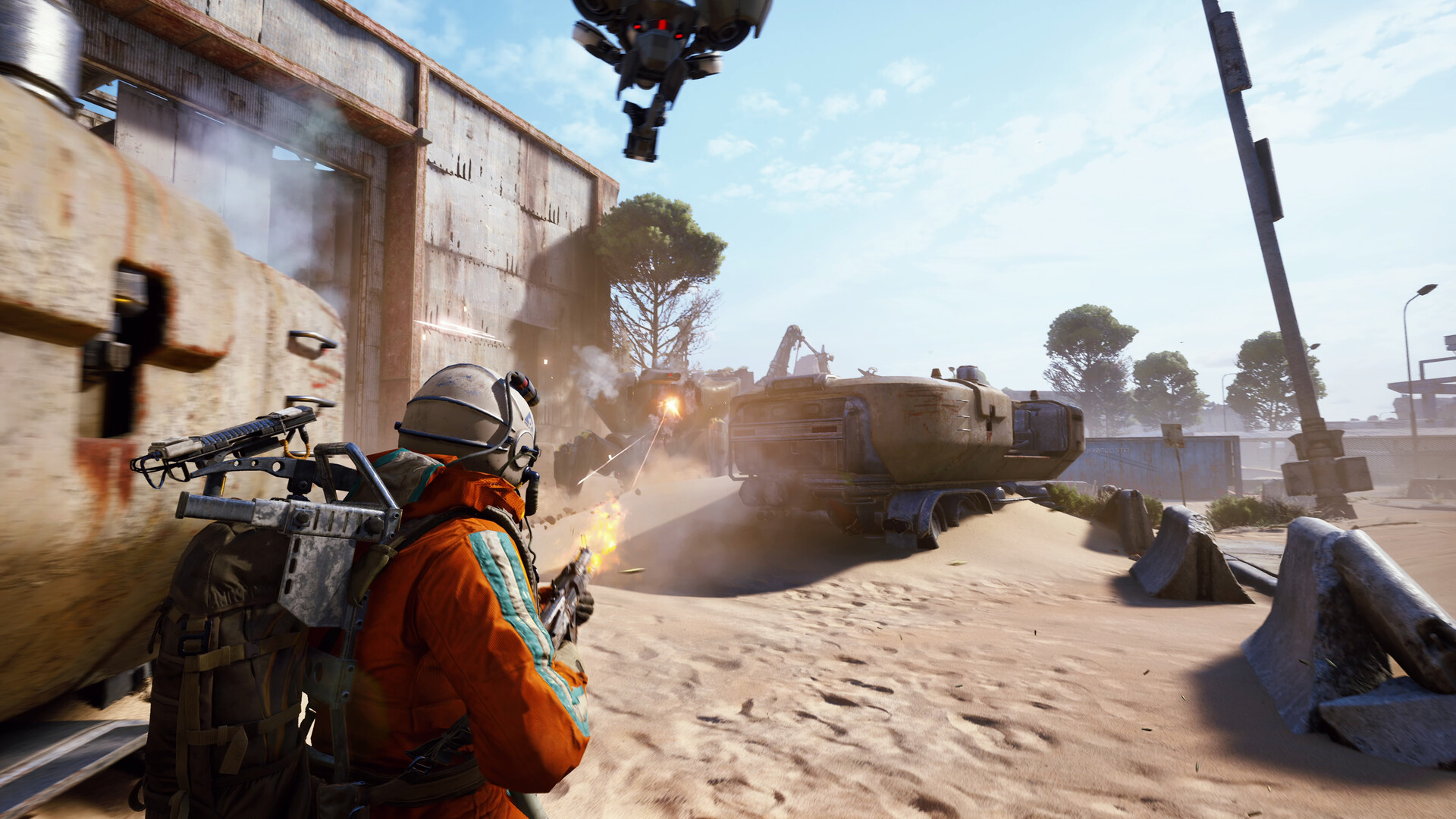
Official game screenshot · Embark Studios. Publisher-provided public store media used to illustrate independent editorial discussion. Copyright remains with the respective rights holders; no redistribution license is offered.
Choose the next piece of cover before moving
Stand somewhere protected and identify where you will stop next. Look for a solid wall, terrain fold or usable interior that breaks the line of sight from the most likely threat. A bush can conceal your outline without stopping incoming fire, while a large wall can protect you from one side and expose another. Plan the landing and the next escape, not only the crossing. When a route ends in a locked door or a steep drop, you may be forced back across the same exposed space under worse conditions.
Spend stamina on exposure rather than habit
Use faster movement when crossing a dangerous gap, then recover in a position with cover. Constantly sprinting until the bar is empty can leave you unable to evade a machine or react to an unexpected player. Carrying weight also matters, so inspect the live limit and lighten unneeded loot before a demanding climb or long exit route. Do not discard a required quest item impulsively; compare the least useful objects first. A smaller backpack that preserves movement and the main goal is preferable to being overloaded with common material while the extraction timer closes.
Listen before opening a second problem
Pause before breaching, firing or entering a room. Footsteps, weapon fire and machine audio can suggest an occupied route, but sounds are not a perfect wall map and patches can change their balance. Official Update 2.1.0 adjusted outdoor footstep levels, so old advice built around an exact sound distance should not be treated as permanent. Use what you hear alongside visible doors, windows and movement. If a nearby fight is not your goal, wait behind cover or choose another approach rather than automatically moving toward the most dramatic noise.
Keep the escape path on your side of the fight
Before shooting, identify where you will go if the first shots do not end the encounter. A solo Raider who pushes into the center of a room may lose access to both the entrance and the next corridor. Fight from a position that lets you break sight rather than betting on winning every exchange. Against an unfamiliar ARC machine, avoid testing the whole attack pattern while other machines are nearby. The supported beginner guide describes flyers such as Wasps and Hornets; even a familiar enemy can become dangerous when the retreat route leads into another patrol.
Use the third-person view without overcommitting
Your camera can reveal an angle before the character fully steps around cover, but that does not mean the whole body is protected from every other direction. Inspect the adjacent roofline, window and approach, then make a short, purposeful movement. Avoid repeatedly exposing the same corner just because you saw an opponent there once. They can move while you watch the old angle. If you need to reload or heal, retreat far enough that an easy push cannot catch the interaction immediately. A camera advantage is useful information, not an extra shield.
Loot in a position you can leave quickly
Close the inventory when movement or sound changes nearby. Do not spend a long time comparing small sale values while standing over a noisy fight’s leftovers. Position yourself so you can return to cover without vaulting an unfamiliar object. Take the material tied to your current task first, then decide whether the remaining items justify the exposure. If you hear another approach, leaving part of a container is an acceptable trade. A solo route works best when each stop is short enough that you retain awareness of the surrounding area.
Break contact deliberately instead of running blindly
When spotted, move toward the solid cover you selected and interrupt the enemy’s line of sight. Avoid sprinting deeper into an unexplored building with no known second door. Once protected, listen, inspect health and shield, and decide whether to disengage completely or observe a safer angle. Healing does not require proving that you can win the same fight first. Smoke or other utility may help a specific crossing, but only if you know the destination. Throwing an item into a random direction can spend the tool without giving you a route to use it.
Practice one route and one correction per raid
Repeat a small area until you know its entrances, covered approaches and extraction connection. Keep reassessing live threats; familiarity is not ownership. If you die, identify whether the error was movement with no stamina, an unnecessary fight, a long inventory stop or no backup exit. Change that behavior rather than treating every loss as an aim problem. A useful practice run can contain little loot and no player fight. It has succeeded if you can move between known positions, react to contact and leave with enough time to operate the exit.
Your working checklist
Checkmarks stay in this browser when storage is available. They do not alter your game or connect to your account.
Put it into practice
- Choose a protected destination before crossing each exposed section.
- Listen and inspect angles before breaching or firing.
- Break sight, recover and reassess instead of chasing every target.
- Leave when the task is secured or the route stops being sustainable.
Before you finish
- Concealment does not necessarily stop damage.
- No voice line or matchmaking tendency guarantees peaceful players.
- A current PvE test should not be described as a permanent safety option.
Common questions
Should a solo player always crouch?
No. Match movement to exposure, sound and stamina. Slow movement in an open firing lane can be worse than a short crossing to solid cover.
Should I shoot every ARC I see?
No. Compare the objective, ammunition, nearby threats and available retreat before starting combat.
What is a good practice goal?
Learn a short covered route and complete its extraction without depending on a lucky fight.