ARC Raiders Indoor Scavenging: Use Sound as a Clue, Not a Complete Map
A sound can reveal activity without resolving floor, route or intent. Pause at useful cover, compare it with the geometry and keep the next exit known while searching an interior.
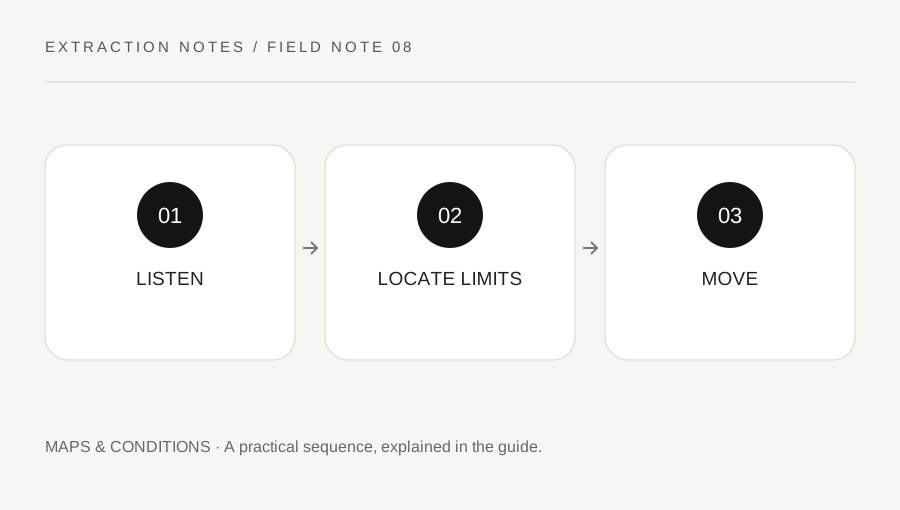
Original explanatory diagram. Examples illustrate a method or decision; they are not claims of personal testing.
Separate the sound from its interpretation
Record what the cue suggests without pretending it supplies every detail. A door, movement or machine sound can indicate activity while the exact source remains unclear. Walls, floors and openings complicate a quick directional impression.
Use comfortable audio settings and reduce unrelated media that masks useful cues. Do not compensate by raising volume without limit. The game's audio can also change through updates; Embark's patch notes have addressed directional clarity and sounds associated with doors and other actions.
This page does not promise an exact hearing distance or claim that one sound identifies every opponent position. The useful first step is naming the uncertainty: activity nearby, floor not confirmed or route behind the wall unknown. That keeps a clue from becoming an invented complete map.
Use the building’s geometry to test the clue
From cover, identify visible doors, stairs, openings and a route back. Compare where the sound could plausibly originate with what the scene actually shows. Do not rush through an opening solely to force confirmation.
If the source remains uncertain, keep the route flexible. A short pause can be useful, but remaining in one predictable exposed spot while listening is not automatically safe. Choose a position that supports both observation and movement.
For a worked example, a Raider hears movement beyond a wall while searching a room. They identify the nearest exit and the visible stair route, then decide whether the required item justifies continuing. They do not announce a precise opponent location to teammates when the floor and connecting path remain unknown.
Keep looting attention and squad coverage explicit
Opening containers and managing inventory divide attention. Tell teammates when you need a moment, and avoid assuming that someone else is watching the approach. A squad can agree on complementary tasks without every player standing over the same container.
Choose what is worth the pause based on the current objective and carrying constraints. A minor optional item may not justify a long menu decision when nearby activity is unresolved. The stash and field-crafting guides address item choices; this page asks where and when those choices occur.
If new sound changes the situation, close the menu and reassess before continuing the old route. Do not treat the original room as permanently clear because it was quiet when you entered. Activity and access can change while the squad focuses on the search.
Review one inference after the raid
Ask which cue was heard, what you inferred and what later evidence confirmed. A mistaken floor estimate is different from failing to react to a clear visible threat. Keep the review specific so the next task addresses interpretation rather than simply buying different headphones.
If audio appears technically missing or inconsistent, record the platform and context and use official support. Do not assert a hidden game mechanic from a single unexplained sound. Version and settings can matter, and a reproducible technical issue deserves a separate report.
Finish with a practical habit: sound, uncertainty, geometry and exit. Indoor scavenging becomes more deliberate when a cue prompts a structured check instead of an immediate chase. The aim is preserving the information you have while avoiding claims the sound cannot support, keeping the raid's actual objective and return route in the decision.
A practical checklist
Choices are saved in this browser. Reset them here or clear this site’s browser storage.
Questions that come up
Does one nearby sound reveal the exact floor?
Not reliably. Use geometry and additional evidence, and keep uncertainty in the call.
Should I solve every audio issue by increasing volume?
No. Keep a comfortable level, reduce masking and use supported settings or official troubleshooting.
Can a quiet room be treated as permanently clear?
No. Players and threats can move while attention is on looting. Reassess when new information appears.
References & scope
Background references checked on 18 October 2026. Worked examples and diagrams are original teaching material.